Your Bank Is Your First Business Partner — Interview Yours Like One
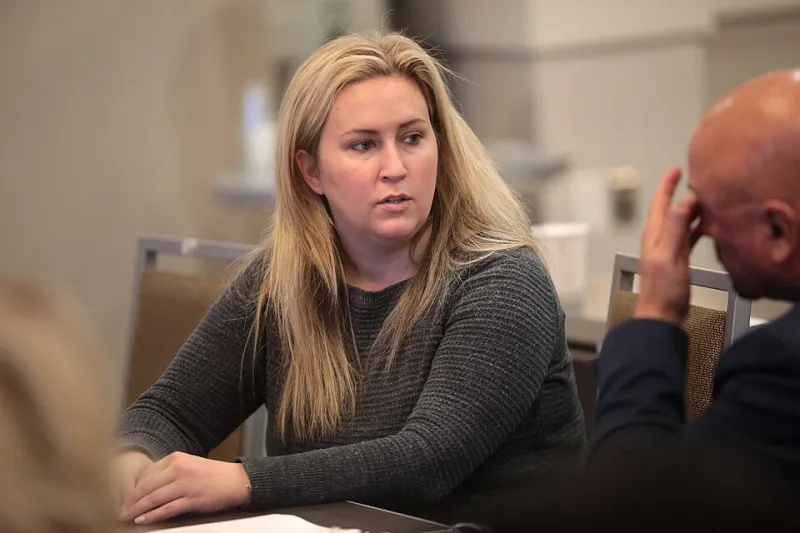
Photo: Gage Skidmore from Surprise, AZ, United States of America, CC BY-SA 2.0, via Wikimedia Commons
You've probably spent more time picking a logo than picking a bank. That's not a jab — it's just the truth for most first-time founders. You need somewhere to park the money, so you walk into the branch where you already have a checking account, sign a few forms, and call it a day.
Six months later, your funds are frozen for a week because of a routine review. Your accounting software won't sync. Your loan application gets routed to a call center that doesn't know what an LLC operating agreement is.
Here's the reframe that changes everything: your bank is a business partner. It holds your money, controls your access to credit, and either smooths your operations or grinds them down. And like any partner, you should interview candidates before committing.
The Default Trap: Why 'Convenience' Is the Most Expensive Reason
Using your personal bank for your business feels smart because it's fast. But personal and business banking are different products with different priorities. Consumer accounts are designed around simplicity; business accounts are judged on things like transaction volume, payroll integration, merchant services, and lending relationships.
The costs of a bad fit rarely show up as a line item. They show up as:
- Frozen funds during compliance reviews that a small-business-friendly bank would've handled in a phone call
- Missing integrations that force you to reconcile books by hand every month
- Loan rejections because your lender has no history with your industry or revenue model
- Time tax — hours spent in phone trees instead of building the business
None of these show up on the fee schedule. All of them show up on your calendar.
Run It Like a Hiring Process
Treat this like filling a critical role. You wouldn't hire the first resume that landed, so don't open an account at the first bank with a parking lot.
Step 1: Write the Job Description
What does your business actually need? A freelance designer needs different things than a food truck or an e-commerce brand. Jot down:
- Expected monthly transactions and deposit volume
- Whether you'll run payroll, take card payments, or send lots of ACH transfers
- Software you already use (QuickBooks, Xero, Stripe, Gusto)
- Whether you'll seek financing in the next 12–24 months
Step 2: Screen the Candidates
Build a shortlist of three to five options — a mix of national banks, regional banks, and local credit unions. Credit unions in particular are often overlooked, yet many have strong small-business lending programs and lower fees because they're member-owned.
Step 3: Interview Them
Call or visit and ask real questions. How they answer tells you as much as the answers themselves:
- "Who is my actual point of contact when something goes wrong?"
- "Does this account integrate with QuickBooks/Xero natively?"
- "What's the typical timeline for a small-business loan or line of credit here?"
- "Do you have SBA 7(a) or microloan experience? How many did you close last year?"
That last one matters more than most founders realize. Banks that actively write SBA loans have process and appetite for businesses like yours. Banks that don't will politely send you somewhere else when you need capital most.
The Comparison Checklist
Score each candidate across five areas before deciding:
1. Fee structure
- Monthly maintenance fee — and how to waive it (minimum balance? transaction count?)
- Transaction limits and overage costs
- Wire, ACH, and cash deposit fees
- Early termination or account closure fees
2. Software and integrations
- Native sync with your accounting platform
- Compatibility with your payment processor
- Quality of the mobile app (check recent reviews, not the bank's marketing)
3. Lending track record
- SBA Preferred Lender status
- Small-business loan volume and approval rates
- Whether they service loans in-house
4. Human support
- A named business banker, not just a 1-800 number
- Branch or local presence if you handle cash
- Response time when you ask a real question
5. Growth room
- Where do account terms change as you scale?
- Payroll, merchant services, and treasury offerings for later
Red Flags: Walk Away Before You Deposit a Dollar
Some warning signs should end the interview on the spot:
- Vague answers about holds. Every bank has compliance reviews, but they should be able to explain the process plainly. Evasiveness here predicts frozen funds later.
- Teaser terms with buried conditions. "Free business checking" that requires a $10,000 minimum balance isn't free — it's a loan you're giving them.
- No small-business staff. If the personal banker handles business accounts too, you're a hobbyist in their eyes.
- Pushy product bundling. If they lead with merchant services packages and credit lines you didn't ask about, they're selling, not serving.
- Bad integration documentation. If their website can't clearly explain how accounts sync with major accounting tools, assume it doesn't — or doesn't well.
The Two-Hour Rule
Here's the honest cost-benefit: a thorough bank search takes about two to three hours. Call three banks, run the checklist, make one phone call to a credit union for comparison. That's it.
Compare that to the alternative — a week of frozen funds during your biggest sales month, or a loan denial because you're a stranger to your own lender. Switching banks later is possible, but it means updating payment processors, vendor autopays, payroll debits, and every client who has your account details on file. Founders who've done it describe it as moving house, in the middle of running a business.
Step Complete: Bank Chosen, On Purpose
Your banking decision won't make headlines, and nobody will congratulate you for reading a fee schedule. But this is exactly the kind of unglamorous step that separates businesses built to last from businesses built to stall.
Open the account like you'd onboard a partner: with questions, with criteria, and with a clear idea of what happens when things go wrong. The right bank won't just hold your money — it'll hold the door open when you're ready to grow through it.